↓
 
  • Home
  • About
    • Contact
    • Gallery
      • Pontifical Solemn High Mass
      • 20th Anniversary Mass
      • Ordination & 1st Mass
  • Index
  • Interviews
  • iPadre Podcast
  • Other Shows
    • ChantCast
    • iPadre VideoCast
    • Voice of Mary
  • Projects
    • Ad orientem – by whose authority?
    • Ad orientem brochures
    • Holy Ghost Renovation
    • Novena to the Holy Spirit
    • Popes Celebrating “Ad Orientem”
    • Series on “ad orientem”
    • Series on the Extraordinary Form
    • Tracts
  • Sample Page
  • Live Stream

The iPadre Catholic Podcast

All things Catholic and then some!

Home 1 2 3 … 95 96 >>  
 

Post navigation

← Older posts

Homily for the Feast of the Holy Family

The iPadre Catholic Podcast Posted on January 12, 2026 by Fr. Jay FinelliJanuary 12, 2026  

The School of Holiness at Nazareth

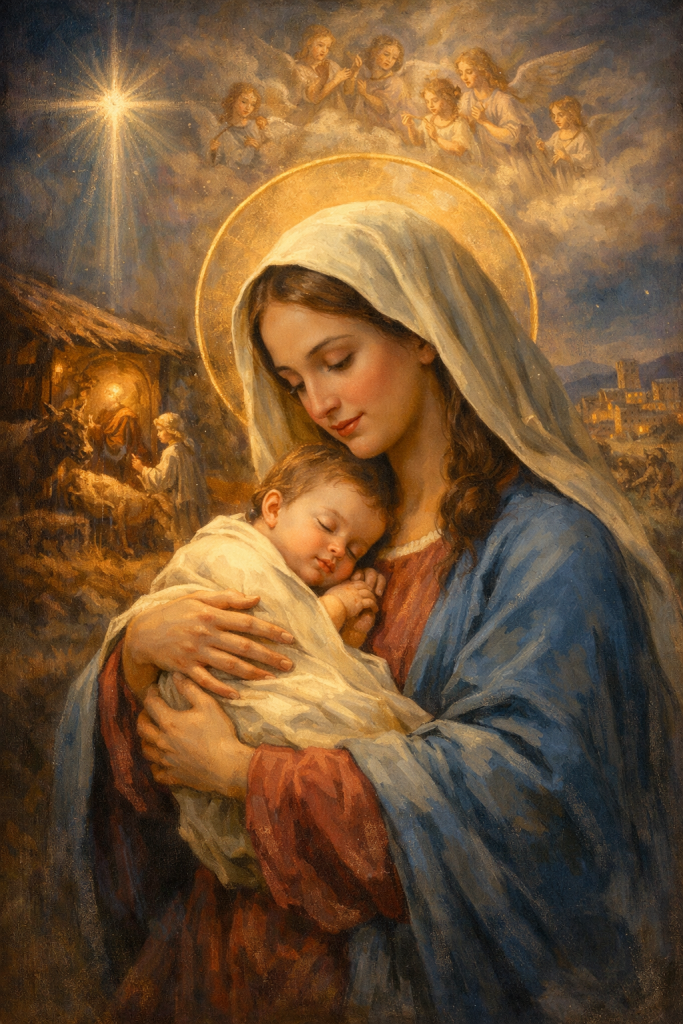
Today’s Collect sets both the tone and the purpose of this feast. In a few carefully chosen words, the Church teaches us that family life itself has been sanctified—made holy— by the obedience of the Son of God within the household of Nazareth.

Our Lord Jesus Christ consecrated family life by His obedience to Mary and Joseph. We rightly proclaim that Christ was obedient to the Father,
but we must not overlook the astonishing truth that the eternal Son of God was also obedient to His human parents. Pause for a moment and consider what this means: God made Himself obedient to His own creatures. He did this not out of necessity, but to give us an example to follow. In the plan of God, obedience is not humiliation—it is the very road to holiness.

By His obedience, Jesus teaches us humility. This obedience was not momentary or symbolic; it was constant and enduring. From Nazareth to Calvary, He submits His will in love. In the Garden of Olives, He cried out: “Not My will, but Your will be done.” And, He teaches us the same in the prayer He Himself gave us: “Thy kingdom come, Thy will be done.”

This obedience is not merely an action—it is a virtue, rooted in humility. Humility lowers the self so that God may be exalted. As Saint Paul reminds us: “He humbled Himself, becoming obedient unto death.” When we practice humility, something within us must die. Pride is weakened. Self-will is surrendered. And in that dying, grace begins to live more fully within us.

The Collect tells us that Christ “consecrated family life with ineffable virtues.” That is the true ideal of the family—not perfection, but holiness.   The family becomes a garden where God plants virtue, nurtures it through sacrifice, and brings forth fruit in due season.

When Jesus is truly at the center of family life, the virtues—and all the workings of the Holy Ghost—begin to flourish. As Fr. Patrick Peyton so often preached, “The family that prays together stays together.” Prayer should mark the ordinary rhythm of the home: before meals, in the morning, and at night before rest. Families should be encouraged to foster the daily Rosary together, and, when possible, a family Holy Hour before the Most Blessed Sacrament. It is also fitting that our homes visibly reflect this faith, with crucifixes and images of Our Lord, Our Lady, and the saints, reminding us daily of whom we belong to and whom we serve.

Let us follow the example of our Lord, who humbled Himself in obedience to Mary and Joseph, so that we too may grow in virtue and holiness, and allow our families to become places where God is truly at home.
Posted in Blog, Sermons | Leave a reply

Homily for the Feast of the Baptism of Our Lord

The iPadre Catholic Podcast Posted on January 11, 2026 by Fr. Jay FinelliJanuary 11, 2026  

The Feast of the Baptism of the Lord is not about Christ being set free from sin, for He is sinless, but about Him setting us free. This moment reveals Him as the promised Messiah of God and marks the beginning of His saving mission.

The prophet Isaiah announces to the people of Israel that the Messiah is coming to liberate them. He is the Chosen One, the Anointed, sent from heaven by the Father. He is the Messiah. “God so loved the world that He gave His only-begotten Son.” The Spirit of the Lord rests upon Him because He is the anointed One. It is a confirmation from heaven that Jesus is the Messiah and the beloved Son of the Father. This is the inauguration of His public ministry. All who witnessed this event knew that Jesus was the fulfillment of all of God’s promises through the prophets – “Behold the Lamb of God” related John the Baptist. What has been true from all eternity is now revealed in time: Jesus is the Anointed One, sent for the salvation of the world.

Because Christ’s baptism is not about the forgiveness of His own sins, it points instead to the Cross. Our Lord submits to a baptism of suffering. His public mission begins here, and that mission leads Him to Calvary. He Himself makes this clear when James and John ask to share in His glory. “You do not know what you are asking. Can you drink the cup that I drink, or be baptized with the baptism with which I am baptized?” The baptism in the Jordan already foreshadows the baptism of blood He will undergo on the Cross.

The Gospel reveals why Christ embraces this suffering. He does so in order to undo the devastation caused by the sin of our first parents. Their disobedience closed the gates of heaven, but Christ’s obedience opens them once again. This is prefigured in His baptism, for when He comes up out of the water, the heavens are opened. The Spirit descends upon the Lord, and the Father speaks in solemn confirmation: “This is My beloved Son, with whom I am well pleased.” The Father is pleased with the perfect obedience and sacrifice of His Son, for Christ alone offers the acceptable sacrifice that reconciles the human race to God.

Our Lord submits to baptism as a sign of His total obedience to the Father’s will. Soon He will be baptized in the blood of the Cross. By His baptism in the waters of the Jordan, He sanctifies the waters so that we might be freed from the ancient curse of sin and given the hope of eternal life in the Kingdom of God.

Posted in Blog, News | Leave a reply

Homily for the Feast of the Holy Name of Jesus – 2026

The iPadre Catholic Podcast Posted on January 4, 2026 by Fr. Jay FinelliJanuary 4, 2026  

Today the Church celebrates the Feast of the Holy Name of Jesus. The Gospel appointed for this feast is the same as that of the Feast of the Circumcision. It is the shortest Gospel of the entire year, yet it loses nothing by its brevity, for it makes its point swiftly and unmistakably: the Child is named Jesus.

We are blessed to live in a time when this feast is firmly established in the life of the Church, for this was not always the case. There was a time when no Feast of the Holy Name existed at all. St. Bernardine of Siena, the great champion of devotion to the Holy Name of Jesus, was summoned to Rome and accused of heresy—not once, but on several occasions—for promoting this devotion. His opponents considered it a dangerous innovation. Imagine such opposition to devotion to the very Name that the Archangel Gabriel commanded both the Blessed Virgin Mary and Saint Joseph to give to the Christ Child.

We do not celebrate just any name today; we celebrate the Most Holy Name of Jesus. This Name is holy because it belongs to the Son of God, the Eternal Word made flesh. It is holy because Gabriel did not speak in his own authority, but as the messenger of the Eternal Father who sent him. It is holy because it is the Name above every other name, for, as Scripture declares, “there is no other name under heaven given among men by which we must be saved.” This is a Name that must be honored, reverenced, and boldly proclaimed. As St. Bernardine wrote, “The Name of Jesus is the glory of the Church militant, the joy of the Church triumphant, and the hope of the Church suffering.”

Throughout history, countless preachers have proclaimed this Name, saints have died with it upon their lips, and Christians have been tortured and martyred for the Name of Jesus. Yet the Holy Name must be restored anew to every corner of the Church. Too often homilies have become generic, religious instruction has been stripped bare, and even sacred edifices have been scrubbed clean of the Holy Name. St. Bernardine warned us plainly: “Remove the Name of Jesus from preaching, and it loses its fire; remove it from prayer, and it loses its power.”

Let us therefore resolve to call frequently upon the Holy Name of Jesus throughout our days. We must purify our tongues, lest we ever take that Holy Name in vain. Many are rightly offended by vulgar words, yet they should tremble at the misuse of the Name of our dear Savior. As St. Bernardine so beautifully teaches, “Nothing more sweet can be sung, nothing more joyful can be heard, nothing more powerful can be invoked than the Name of Jesus.”

May the Holy Name of Jesus—terror of demons and sweetness to the angels—be praised, adored, and loved by all peoples, in every nation, age, and place. May His most holy Name ever flow from our lips like a sweet fragrance, driving away all evil and drawing down grace upon grace into our souls.

Posted in Blog, Sermons | Leave a reply

Homily for the Feast of Epiphany – 2026

The iPadre Catholic Podcast Posted on January 4, 2026 by Fr. Jay FinelliJanuary 4, 2026  

“Rise up in splendor, Jerusalem! Your light has come; the glory of the Lord shines upon you.”

The Feast of the Epiphany reveals Christ as Light—not only to Israel, but to all nations. Today we contemplate how God draws souls to Himself through light, grace, and divine guidance. Our Lord proclaims, “I am the light of the world; he who follows Me will not walk in darkness, but will have the light of life.” In the Nicene Creed we profess this same truth when we declare that Jesus Christ is “God from God, Light from Light, true God from true God.” Christ is not merely a teacher who points toward the truth; He is the Truth. He is the Light that dispels the darkness of sin, confusion, and death.

The star that led the Magi to Bethlehem was a special grace from God. While it may have appeared as a physical or astronomical phenomenon, it was far more than that. Alongside the visible star was an interior light—a supernatural prompting that stirred their hearts and moved their wills. This divine guidance led them from distant lands to seek not an earthly ruler, but the King of kings. God Himself drew them forward, step by step, until they knelt before the Christ Child in humble adoration.

Like the Magi, our own supernatural life is guided through this world toward eternity by grace. We cannot reach heaven by our own strength. Our Lord makes this clear when He says, “Without Me, you can do nothing.” We first received grace at Baptism, when original sin was washed away and sanctifying grace was infused into our souls. This sanctifying, or habitual, grace is a stable and supernatural disposition that enables us to live in friendship with God and to act according to His will. Alongside this, God gives us actual graces—supernatural helps granted at specific moments to enlighten the mind and strengthen the will. These graces assist us in performing good and salutary acts and pass once the action is complete.

The Magi themselves were moved by such actual grace. It made them attentive to the star in the sky and responsive to its meaning. They followed where God led, even when the journey was long, difficult, and uncertain. In the same way, actual grace can lead an unbeliever to seek the truth and ultimately to receive sanctifying grace through Baptism. It can lead a soul to come to know, love, and serve God in this life, so as to be happy with Him forever in heaven.

As we enter this New Year, let us pray for two things. First, for the actual graces we need to grow and strengthen our union with God. Second, for those who do not yet know His love. May fallen-away Catholics return to the harbor of truth, and may those who have never entered follow the light within their souls, until it leads them to the light in the sanctuary, proclaiming the living presence of Christ in the Blessed Sacrament.

Posted in Blog, Sermons | Leave a reply

Homily for Sunday in the Octave of Christmas – 2025

The iPadre Catholic Podcast Posted on January 4, 2026 by Fr. Jay FinelliJanuary 4, 2026  

The Introit for this Sunday’s Mass is profoundly moving, for in just a few lines it expresses the entire mystery of the Incarnation: “When a profound stillness compassed everything and the night in its swift course was half spent, Your all-powerful Word, O Lord, bounded from heaven’s royal throne.” The Incarnation and the birth of Christ did not take place amid bright lights, public spectacle, or human applause. They did not happen on a stage or beneath the glare of fame. Rather, they occurred in the most hidden and humble way imaginable.

Tradition holds that the Son of God was born at midnight—the darkest hour of the night, when most of the world is asleep and all is still. “The night in its swift course was half spent.” The world had nothing left to give. Humanity was exhausted, empty of hope, and powerless to save itself. It is precisely then that God intervenes. The mystery comes to a dark and broken world not because man has prepared himself, but because man cannot help himself. When human effort reaches its limit, divine mercy steps in.

The mystery of the Incarnation stands in complete contrast to the way the world acts. The Lord of heaven and earth does not seek applause or fanfare. He comes in humility—hidden from the eyes of the wise and learned, and revealed to the poor in spirit, to those willing to receive Him with humility and love. Our Lord did not seek recognition or honor from the world. As Saint Paul teaches, “Though He was in the form of God, He did not count equality with God a thing to be grasped, but emptied Himself, taking the form of a servant, being born in the likeness of men. And being found in human form, He humbled Himself” (Philippians 2:6–8). Truly, the ways of God are not the ways of men.

The phrase “Your all-powerful Word” deliberately echoes the words of Saint John’s Gospel: “In the beginning was the Word, and the Word was with God, and the Word was God.” The eternal Logos, the Word through whom all things were made, becomes flesh in the Immaculate womb of the Virgin Mary. The Creator enters His creation—not diminished, but hidden.

The Introit tells us that the Word “bounded from heaven’s royal throne.” He leapt down without hesitation or delay. This is a decisive act of love on behalf of fallen humanity. The Eternal Word descends from heaven to rescue a people wounded by sin and disobedience. God became man so that man might share in the life of God. Through grace, we are not merely restored; we are elevated. Before the Fall, our first parents possessed a perfect natural life. Because of the Incarnation, we are now offered something greater: supernatural life.

As the Eternal Word leapt down from heaven to rescue us, let us now leap into His sacred arms, that we may be strengthened, protected, and comforted by His holy embrace.

Posted in Blog, Sermons | Leave a reply

Homily for Feast of the Circumcision – 2026

The iPadre Catholic Podcast Posted on January 4, 2026 by Fr. Jay FinelliJanuary 4, 2026  

“His name was called Jesus, the name given Him by the angel before He was conceived in the womb.” God greatly exalted Him and bestowed on Him the name that is above every name, so that at the name of Jesus every knee should bend. From the very beginning, heaven revealed who this Child is: “Behold, you will conceive in your womb and bear a son, and you shall name Him Jesus.” The name Jesus means “God saves,” for salvation comes from our God, who is seated on the throne, and from the Lamb. In the giving of His holy name, we are already taught that this Child has come not merely to live among us, but to redeem us.

On this day, we also see the work of redemption begin in the shedding of His Blood. At His circumcision, the Precious Blood of the Savior touches the earth for the first time. One single drop would have been sufficient to bring about the full fruits of salvation, yet He would later choose to pour out all of it upon the Cross. Here we glimpse the terrible power of that Blood, before which all the demons of hell recoil in fear and hatred. Soon after this event, Herod would order the slaughter of all the boys in Bethlehem and its vicinity two years old and under, as darkness raged against the Light newly manifested in the world.

Because of this mystery, Our Lord Jesus Christ transforms human suffering. Every drop of blood, every sorrow, every ache and pain freely offered is received by the Father. As Saint Paul teaches, “In my flesh I am filling up what is lacking in the afflictions of Christ on behalf of His body, which is the Church.” United to Christ, our sufferings are no longer empty or meaningless; they become redemptive. When we freely accept and offer them, the Father receives them in union with His Son, as though they were the sufferings of Christ Himself. As the prophet foretold, “Surely He hath borne our infirmities and carried our sorrows.” Because of His Passion, our suffering is transformed.

Let us therefore unite all of our sufferings with His, asking that He transform us and use all that we offer for the salvation of souls redeemed by Him

Posted in Blog, Sermons | Leave a reply

Homily for Christmas – 2025

The iPadre Catholic Podcast Posted on January 4, 2026 by Fr. Jay FinelliJanuary 4, 2026  

The ancient prophecies foretold that the promised Messiah would be born in Bethlehem. From the Book of Micah we read: “But you, O Bethlehem Ephrathah, who are little to be among the clans of Judah, from you shall come forth for me one who is to be ruler in Israel” (Mic 5:2). Jeremiah further tells us that the Messiah would come from the line of David: “Behold, the days are coming, says the Lord, when I will raise up for David a righteous Branch” (Jer 23:5). It was clearly part of God’s plan that Jesus would be born in the City of David, the great king of Israel. Joseph and Mary went up to Bethlehem to be enrolled in the census because Joseph was of David’s lineage. In fact, both Joseph and Mary were descendants of David, placing their newborn Son firmly within the royal line. And as the eternal Son of God, Christ would unite in Himself kingship and priesthood, becoming not only the Son of David, but our eternal High Priest.

All of this is important, and much more could be said. But there is another point we should consider this Christmas. The name Bethlehem is made up of two Hebrew words meaning “House of Bread” or “House of Food.” In Arabic, its literal meaning is “House of Meat.” One might be tempted to dismiss this as insignificant, but there are no coincidences in salvation history—and certainly none with God, who is the Lord of time and eternity. Our Lord Himself reveals the meaning of this mystery in Saint John’s Gospel when He declares, “I am the bread of life; whoever comes to me shall not hunger, and whoever believes in me shall never thirst” (Jn 6:35). He continues with words that are even more striking: “Truly, truly, I say to you, unless you eat the flesh of the Son of Man and drink his blood, you have no life in you” (Jn 6:53).

This teaching reaches its fulfillment at the Last Supper, on the night He was betrayed. “Then he took bread, said the blessing, broke it, and gave it to them, saying, ‘This is my body, which will be given for you; do this in memory of me’” (Lk 22:19). Returning again to John chapter six, Jesus leaves no room for misunderstanding: “Unless you eat the flesh of the Son of Man and drink his blood, you have no life in you” (Jn 6:53).

All of this is bound together by a single golden thread. Bethlehem in Hebrew is the House of Bread, and Jesus calls Himself the Bread of Life. Later, He takes bread, declares it to be His Body, gives it to His disciples to eat, and commands them to “do this” in His memory. Then we recall the Arabic name—House of Meat—and His insistence: “Unless you eat my flesh and drink my blood, you have no life in you.” Many were offended by these words and began to leave Him. Jesus then said to the Twelve, “Do you also wish to go away?” (Jn 6:67). Simon Peter answered Him with words that remain the confession of the Church: “Lord, to whom shall we go? You have the words of eternal life” (Jn 6:68).

Every time we kneel at the altar, we kneel once again at the crib. The same Jesus born in Bethlehem now feeds us with His true Flesh and true Drink. As we celebrate the feast of His Nativity, let us give thanks for this little Bethlehem, where the Bread of Life first came into the world—for us.

Posted in Blog, Sermons | Leave a reply

Homily for the Feast of the Holy Family – 2025

The iPadre Catholic Podcast Posted on January 4, 2026 by Fr. Jay FinelliJanuary 4, 2026  

Sacred Scripture reveals that the mystery of the Nativity unfolds under the constant presence and guidance of the Holy Angels. In fact, there are eight distinct angelic appearances surrounding the birth and early life of Our Lord. Through them, God instructs, reassures, warns, and protects the Holy Family.

The first two appearances are by the Archangel Gabriel. He appears to Zechariah, announcing the birth of John the Baptist to his elderly wife, Elizabeth, and telling him that this child will prepare the way for the Messiah. Gabriel then appears to a young maiden, the Virgin Mary, announcing that she will conceive by the power of the Holy Spirit. The Child to be born will be the Son of God, and His name is to be Jesus.

Next, “an angel of the Lord,” whose name is not revealed, appears to Joseph in a dream. He confirms Mary’s virginal conception and instructs Joseph to take Mary as his wife. Joseph is commanded to name the Child Jesus, for He will save His people from their sins.

Then a multitude of angels appears to the shepherds in the fields, proclaiming the Good News of the Incarnation: “Glory to God in the highest.” They announce, “For today in the city of David a Savior has been born for you, who is Messiah and Lord” (Lk 2:11). The angels send the shepherds to find the newborn King, lying in a manger.

Once again, an angel of the Lord appears to Joseph in a dream, warning him of the imminent danger posed by Herod. The Holy Family is instructed to flee into Egypt. After Herod’s death, the angel appears again, telling Joseph that it is safe to return, and finally directs them to settle in Nazareth.

Throughout these events, the angels instruct, guide, and protect the Holy Family. They are God’s messengers and His ministers, assisting His people according to His divine will.

Like the Holy Family, we too should foster a deep devotion to the Holy Angels, that they may guide us, protect us, and assist us in this life, and one day welcome us into the life to come.

Posted in Blog, Sermons | Leave a reply

Second Day of Christmas – St. Stephen

The iPadre Catholic Podcast Posted on December 26, 2025 by Fr. Jay FinelliDecember 26, 2025  

Merry Christmas, everyone!
As the old song reminds us, “It’s only just begun…”

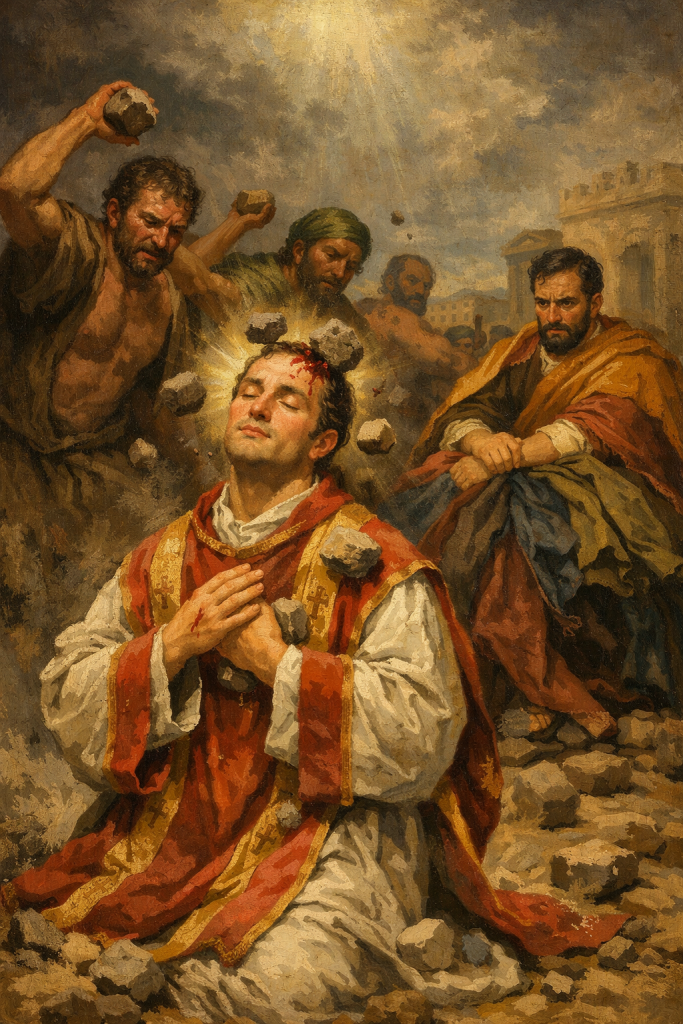
On this Second Day of Christmas, the Church sets before us the Feast of St. Stephen, Protomartyr.

Was it the pouring out of Stephen’s blood that opened the way for Saul’s conversion into St. Paul? Sacred Scripture does not say so directly, yet the Church has long pondered this mystery. What we do know is this: suffering offered in union with Christ is never wasted. Let us, then, offer our daily sacrifices—especially those that are hidden or misunderstood—in union with Jesus Christ for the conversion of sinners, particularly those most distant from His Heart.

At first glance, it may seem strange that the Church celebrates a martyr’s death so soon after Christmas. Should we not still be kneeling quietly before the Child in the manger? Yet this feast fits perfectly within the Christmas mystery. It reminds us why the Son of God took flesh. He did not come merely to be admired—though He is worthy of all adoration—but to redeem us and to show us the path to eternal life.

The Incarnation leads inexorably to the Cross.

The life of a disciple, therefore, is a life marked by sacrifice—not a rejection of joy or human goods, but their right ordering. As my dear friend Eileen George once said, “God didn’t make all the good things for bad people.” God created what is good so that we might know Him, love Him, and serve Him in this life—and be happy with Him forever in heaven. He desires our happiness even now. Discipleship is not a call to misery, but an invitation to transform suffering into love, to “make up what is lacking in the sufferings of Christ.”

Today’s feast, at its heart, is a feast of love. Only one who truly loves Christ can give his life for Him. “There is no greater love than this: to lay down one’s life for one’s friends.” As Stephen was being stoned, we witness that love made visible. His final words were not curses or cries for vengeance, but mercy:
“Lord, do not hold this sin against them.”
And having said this, Scripture tells us, “he fell asleep.”

How fitting this is for Christmas. The innocent Child lying in the manger would grow to be the God-Man who, from the Cross, would utter His own final prayer of love:
“Father, forgive them, for they know not what they do.”

In St. Stephen and in Our Lord Jesus Christ, we are given the same lesson: love that forgives, even in suffering. It is a message we especially need to hear—and to live—during these holy days of Christmas.

Merry Christmas!

Posted in Blog | Leave a reply

Homily for 4th Sunday of Advent – year A – 2025

The iPadre Catholic Podcast Posted on December 22, 2025 by Fr. Jay FinelliJanuary 4, 2026  

Introduction

This Sunday could rightly be called “Mary Sunday,” for it places before us the unique role of Our Lady in the mystery of redemption. As we stand on the threshold of Christmas, the Church turns our gaze to the Virgin who, by faith and obedience, made the Incarnation possible.


1. The Birth of Christ

St. Matthew is careful to make one thing unmistakably clear: the conception of Our Lord Jesus Christ was not by natural means.
Mary was betrothed to Joseph, but they did not yet live together. Scripture states plainly:

“She was found with child through the Holy Spirit.” (Mt 1:18)

The origin of Christ’s conception is therefore divine, not human. Jesus is not the son of man by generation, but the Son of God by nature, who takes flesh through a miracle of grace.


2. The Virginity of Mary

Our Lady was a virgin, consecrated to God from a young age. This fulfills the prophecy spoken centuries earlier by Isaiah:

“Behold, a virgin shall conceive and bear a son, and they shall call his name Emmanuel.” (Is 7:14)

This prophecy reveals a direct intervention of the Holy Spirit, which the Church professes in her Creeds.
In the Nicene Creed, we declare:

“And by the Holy Spirit was incarnate of the Virgin Mary, and became man.”

In the Apostles’ Creed, we profess:

“He was conceived by the Holy Spirit, born of the Virgin Mary.”

Together, Scripture and Creed testify to two essential truths:

  • Mary was truly a Virgin.
  • Her Child was conceived by God.

The Second Person of the Blessed Trinity assumed our human nature—our very flesh—without ceasing to be God.


3. The Blessed Virgin Mary

The Church teaches not only that Mary was a virgin before the conception of Christ, but that she remained a virgin before, during, and after His birth. The Catechism of the Catholic Church states:

“The deepening of faith in the virginal motherhood led the Church to confess Mary’s real and perpetual virginity even in the act of giving birth to the Son of God made man.” (CCC 499)

This faith was not invented later; it has been believed and professed from the earliest days of the Church.
The Second Council of Constantinople (553) declared:

“If anyone does not confess that the holy, ever-virgin and immaculate Mary is truly the Mother of God… let him be anathema.”

The Lateran Council of 649 defined:

“The blessed Mary, ever virgin, conceived without seed, by the Holy Spirit, and without loss of integrity brought Him forth, and after His birth preserved her virginity inviolate.”


4. Witness of the Saints

The saints consistently defended and proclaimed this doctrine.
St. Jerome, writing in the fourth century against Helvidius, stated:

“You say Mary did not continue a virgin: I claim still more—that Joseph himself, on Mary’s account, was a virgin.”

St. Thomas Aquinas later affirmed:

“Without any doubt, Christ’s Mother was a virgin before birth, in birth, and after birth.”

These voices echo the unbroken faith of the Church.


Closing

As we draw very near to the celebration of Christ’s birth, the Church places before us Mary, the Virgin Mother of God. She who bore the Eternal Word in her immaculate womb offered herself entirely to the Eternal Father. Her perpetual virginity stands as a living testimony to the divinity of her Son and the holiness of God’s saving work.

May her faith prepare our hearts to receive Christ with reverence, purity, and joyful expectation.

Posted in Blog | Leave a reply

Post navigation

← Older posts

Recent Posts

  • Homily for the Feast of the Holy Family
  • Homily for the Feast of the Baptism of Our Lord
  • Homily for the Feast of the Holy Name of Jesus – 2026
  • Homily for the Feast of Epiphany – 2026
  • Homily for Sunday in the Octave of Christmas – 2025

Recent Comments

  1. Fr. Jay Finelli on St. Thérèse’s Feast – October 1, 2025
  2. Fr. Jay Finelli on Anointing of the Sick for Dogs?
  3. Fr. Jay Finelli on Anointing of the Sick for Dogs?
  4. Fr. Jay Finelli on St. Thérèse’s Feast – October 1, 2025
  5. Kim Caserta on Anointing of the Sick for Dogs?

Archives

  • January 2026
  • December 2025
  • October 2025
  • September 2025
  • July 2025
  • May 2025
  • April 2025
  • January 2025
  • March 2024
  • December 2023
  • January 2023
  • December 2022
  • April 2022
  • March 2022
  • January 2022
  • October 2021
  • August 2021
  • May 2021
  • December 2020
  • November 2020
  • August 2020
  • April 2020
  • March 2020
  • February 2020
  • January 2020
  • November 2019
  • October 2019
  • June 2019
  • May 2019
  • April 2019
  • January 2019
  • September 2018
  • August 2018
  • July 2018
  • June 2018
  • May 2018
  • April 2018
  • March 2018
  • February 2018
  • December 2017
  • October 2017
  • August 2017
  • July 2017
  • June 2017
  • May 2017
  • April 2017
  • March 2017
  • January 2017
  • December 2016
  • November 2016
  • October 2016
  • August 2016
  • July 2016
  • June 2016
  • May 2016
  • April 2016
  • March 2016
  • January 2016
  • December 2015
  • November 2015
  • October 2015
  • September 2015
  • August 2015
  • July 2015
  • June 2015
  • May 2015
  • April 2015
  • March 2015
  • February 2015
  • January 2015
  • December 2014
  • November 2014
  • October 2014
  • September 2014
  • August 2014
  • July 2014
  • June 2014
  • May 2014
  • April 2014
  • March 2014
  • February 2014
  • January 2014
  • December 2013
  • November 2013
  • October 2013
  • September 2013
  • August 2013
  • July 2013
  • June 2013
  • May 2013
  • April 2013
  • March 2013
  • February 2013
  • January 2013
  • December 2012
  • November 2012
  • October 2012
  • September 2012
  • August 2012
  • July 2012
  • June 2012
  • May 2012
  • April 2012
  • March 2012
  • February 2012
  • January 2012
  • December 2011
  • November 2011
  • October 2011
  • September 2011
  • August 2011
  • July 2011
  • June 2011
  • May 2011
  • April 2011
  • March 2011
  • February 2011
  • January 2011
  • December 2010
  • November 2010
  • October 2010
  • September 2010
  • August 2010
  • July 2010
  • June 2010
  • May 2010
  • April 2010
  • March 2010
  • February 2010
  • January 2010
  • December 2009
  • November 2009
  • October 2009
  • September 2009
  • August 2009
  • July 2009
  • June 2009
  • May 2009
  • April 2009
  • March 2009
  • February 2009
  • January 2009
  • December 2008
  • November 2008
  • October 2008
  • September 2008
  • August 2008
  • July 2008
  • June 2008
  • May 2008
  • April 2008
  • March 2008
  • February 2008
  • January 2008
  • December 2007
  • November 2007
  • October 2007
  • September 2007
  • August 2007
  • July 2007
  • June 2007
  • May 2007
  • April 2007
  • March 2007
  • February 2007
  • January 2007
  • December 2006
  • November 2006
  • October 2006
  • September 2006
  • August 2006
  • July 2006
  • June 2006
  • May 2006
  • April 2006
  • March 2006
  • February 2006
  • January 2006
  • December 2005
  • November 2005
  • October 2005
  • September 2005

Categories

  • Blog
  • ChantCast
  • Featured
  • iPadre Podcast
  • iPadre Video Podcast
  • News
  • Sermons
  • Uncategorized
  • Voice of Mary
© Fr. Jay A. Finelli - Weaver Xtreme Theme
↑